
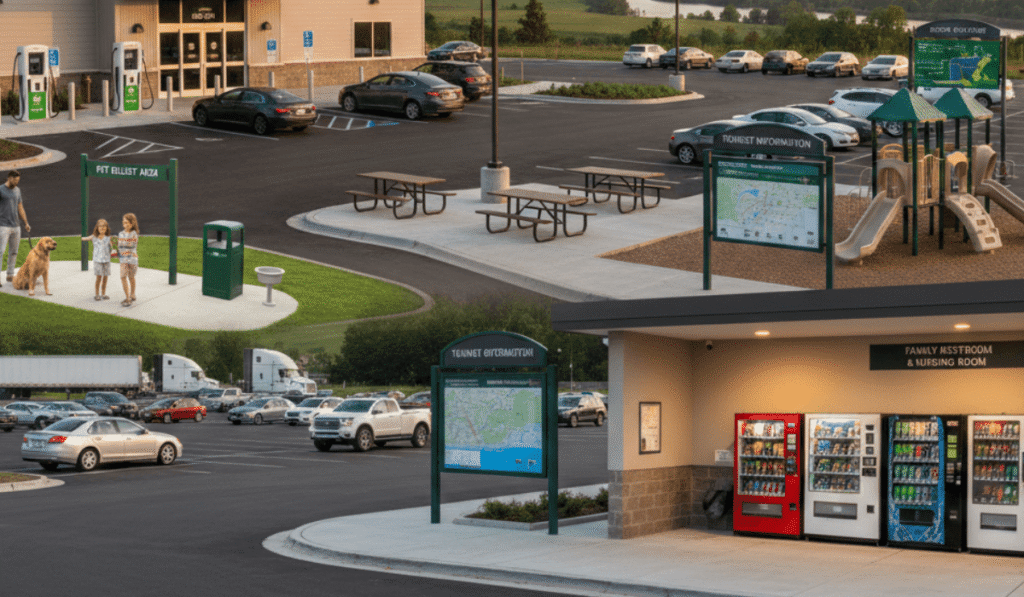
If you’ve only ever used a rest area in a rush — dashed in, used the bathroom, dashed out — you might not realize how much some of these places have to offer. And if you’ve ever been burned by a closed facility or a vending machine that ate your dollar, you might have sworn them off entirely. The truth is, US rest areas range from gloriously well-appointed welcome centers to bare-bones pullouts with a port-a-potty. As someone who’s spent a lot of time on interstates, here’s an honest, first-hand review of what you can actually expect.
The Baseline: What Every Rest Area Should Offer
Restrooms and parking — that’s the legal minimum, and every operational rest area provides both. The restroom quality, though, is where things start to vary wildly. Modern rest areas built or renovated in the last decade often have automatic fixtures, good ventilation, and regular cleaning schedules. Older facilities can feel like stepping back in time in ways that aren’t charming.
Vending machines are nearly universal. Expect drinks and basic snacks. Some areas have expanded vending with sandwiches and hot beverages, which feels like a small miracle at mile 400 of a long drive. Picnic tables are also standard at most rest areas — particularly in rural or scenic locations where the designers clearly intended for people to slow down and actually enjoy the surroundings.
Mid-Level Amenities: Pet Areas, Wi-Fi, and Information Centers
Pet relief areas are increasingly common and genuinely make a difference for the huge number of Americans who travel with dogs. A dedicated grassy patch with waste bag dispensers and a water station is a small thing that goes a long way. Some states — Florida and Virginia, especially — have made pet areas a near-standard feature at their rest facilities.
Wi-Fi availability is growing, though reliability varies. Some states have invested in bringing real connectivity to their rest areas, while others still have spotty or non-functional systems. Don’t count on it for serious work, but it’s a nice bonus when it works.
Tourist information kiosks and staffed welcome centers are some of the most underrated features at state border rest areas. Real humans who know the state and can give you actual recommendations? In the age of Yelp algorithms, that’s refreshing. Many also stock free maps, coupons, and local guides.
Family-Focused Features: Nursing Rooms, Family Restrooms, and Playgrounds
Newer rest areas are increasingly thoughtful about families. Family restrooms — larger accessible spaces that accommodate a parent with young children — are showing up at more locations. Nursing rooms (private, comfortable spaces for breastfeeding) are still less common but growing.
A handful of rest areas, particularly along family-heavy routes in the Southeast and Midwest, have small playgrounds. Letting kids burn off energy for 15 minutes before climbing back in the car is genuinely worth a stop, and it makes the next two hours much more peaceful for everyone.
Premium Features: EV Charging, Scenic Views, and More
Welcome centers at state borders are often the most impressive rest facilities you’ll encounter. Many have been designed as genuine showcases for their state — architecturally interesting buildings, local artwork, regional exhibits, and landscaped grounds. Some offer free coffee, live music on weekends, or local food vendors.
EV charging stations are the newest frontier. States like California, New York, and Florida have been adding chargers to their rest areas as part of broader clean energy initiatives, and federal infrastructure funding is accelerating this across the country. It’s still hit or miss depending on where you are, but the trend is clearly in the right direction.
Scenic rest areas — the ones perched on a ridgeline in Tennessee or overlooking a river in Montana — deserve a special mention. These aren’t just functional stops; they’re genuine destinations. If your route includes one, build in 20 minutes to actually take it in.
How to Know What You’re Getting Before You Pull In
The best strategy is to check before you need to stop. State DOT websites publish facility information, including current hours and closures. Apps like iExit show upcoming rest areas with user reviews and amenity listings. And restareasnearme.com lets you search your route in advance so there are no surprises. A little homework before you leave means you stop when you want to, not when you’re desperate.