
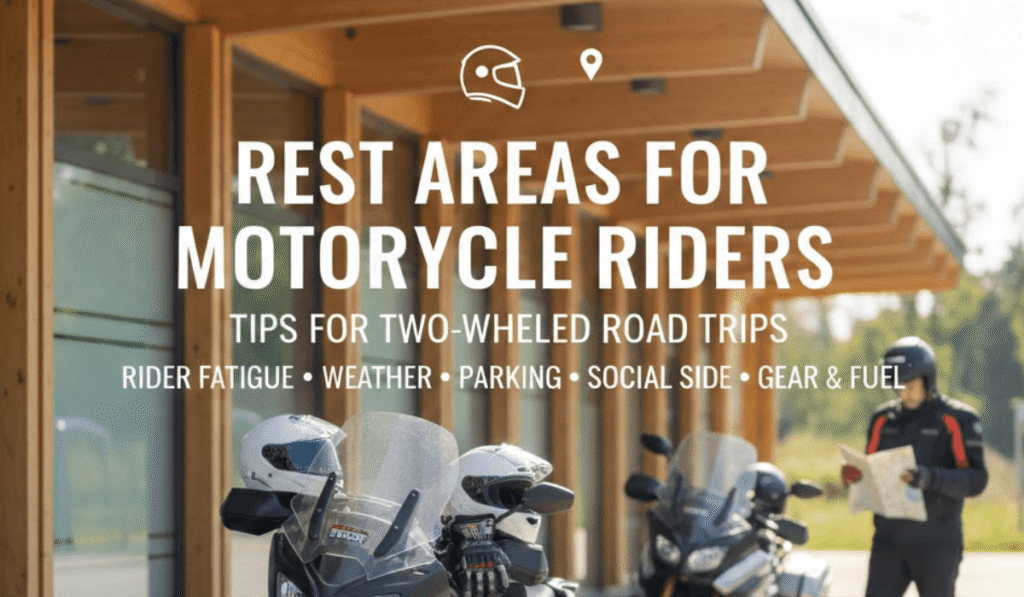
Riding a motorcycle on a long road trip is one of the most physically and mentally engaging ways to travel in America. You’re not separated from the road by climate-controlled glass — you feel the temperature change as you drop into a valley, smell the pine trees before you see them, and arrive at each destination having actually experienced the miles between. Rest areas are essential to doing this well and safely. Here’s what motorcycle riders specifically should know.
Rider Fatigue Is Different From Driver Fatigue
Riding a motorcycle demands more of your body than driving a car. You’re actively balancing, responding to wind and road surface, managing throttle and brakes with precision, and maintaining constant physical engagement with the machine. This combination of mental and physical demand means rider fatigue sets in faster than driver fatigue — often significantly so.
Most experienced long-distance riders follow a stricter break schedule than car drivers: every 60 to 90 minutes rather than every two hours. This isn’t overly cautious; it reflects the physical reality of sustained riding. A stretched, rested rider is a safer rider.
Weather and Rest Stops
Motorcycle riders are exposed to weather in a way that car drivers simply aren’t. A sudden downpour that’s merely an inconvenience in a car is a genuine riding hazard on a motorcycle — reduced visibility, slick roads, and hypothermia risk if you’re not prepared.
Rest areas are your first shelter option when the weather turns. Pulling under a covered walkway or into a protected area while a storm passes is the smart call. Most rest area buildings are unlocked 24 hours and provide genuine protection from rain and wind.
Keep an eye on the sky and watch weather apps before long exposed stretches. If a storm is building, stop early — a 30-minute wait at a rest area beats getting caught in it on an exposed highway.
Motorcycle Parking at Rest Areas
Rest areas almost universally allow motorcycle parking, though designated spots are less common than in European rest areas. Most riders simply pull into a car space, which is fine and expected.
Avoid parking on painted surfaces or in areas where oil drips from cars has accumulated — these become dangerously slick in rain. Look for a clean section of pavement away from the main traffic flow. Don’t park on grass or gravel if you can avoid it, especially if your sidestand has a tendency to sink on soft surfaces.
The Social Side of Motorcycling and Rest Areas
Motorcycle riders tend to be a sociable community on the road. Rest areas are natural gathering points — you’ll often find other riders who nod in recognition, swap route recommendations, and share tips about road conditions ahead. Some of the most useful local knowledge about road quality, speed traps, and must-see detours comes from other riders at rest stops.
If you’re new to long-distance riding, these informal conversations are worth having. Experienced touring riders are generally generous with their knowledge, and a five-minute conversation at a rest area has pointed many riders toward routes they never would have found on their own.
Gear Up, Fuel Up, Move Out
The motorcycle rider’s rest area checklist is short: use the facilities, hydrate, check your gear for any adjustments, do a quick visual check of your tires and chain, and get back on the road. Keep stops purposeful — lingering too long in a rest area on a warm day can make it harder to get moving again.
For finding rest areas along motorcycle routes, restareasnearme.com works as well on a phone mounted to your handlebars as it does at a kitchen table. Plan your stops before you ride. Keep them consistent. The miles take care of themselves.