
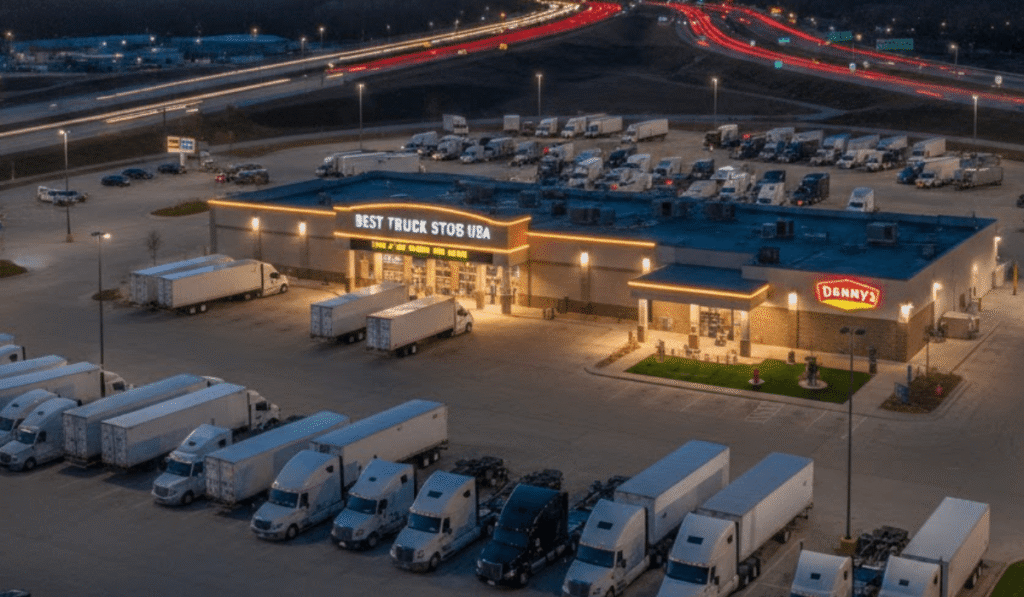
Not all pit stops are created equal. If you’ve ever pulled into a basic highway rest area hoping for a hot meal and a shower only to find a broken vending machine and a hand dryer that gave up in 2009, you already know what I’m talking about. Truck stops are a different beast entirely — and for anyone spending serious time on the road, understanding what they offer and where to find them can change the way you travel. Whether you’re hauling freight across the country or driving the family van from Ohio to Florida, here’s your straight-talking guide to truck stop rest areas across the USA.
Rest Area vs. Truck Stop: Know the Difference
A traditional highway rest area is a government-run facility. It’s free, it’s off the interstate, and it gives you the basics: restrooms, parking, maybe a vending machine. That’s about it. No fuel. No food. No showers. For a quick 15-minute break, they do the job.
Truck stops are privately owned businesses built specifically for drivers who live on the road. They have fuel, restaurants, showers, laundry, parking for big rigs, truck scales, mechanics, and retail stores. They’re open 24 hours, 365 days a year, and they take road travel seriously in a way that government rest areas simply can’t match. For any driver doing long hauls — whether you’re a professional trucker or a road tripper on a multi-day drive — truck stops are almost always the superior stop.
The Amenities That Actually Matter
Showers are the crown jewel of any quality truck stop. After eight or ten hours on the road, a hot shower isn’t a luxury — it’s a necessity. Major chains charge around $12 to $15 for a private shower room that comes with a clean towel, soap, and a lock on the door. You can reserve these in advance through apps, which is smart on busy travel weekends when they fill up fast.
Scales are critical for professional drivers needing to verify their load weight before hitting a weigh station. Most large truck stops have CAT scales right on the lot. For everyday travelers, this isn’t a concern — but it’s one of the key reasons truckers seek out specific stops.
Parking is another big one. Truck stops have the lot space that rest areas don’t. You’re talking about acres of paved, lit parking where you can sleep in your cab, stretch out, or spend a few hours without worrying about time limits. Most rest areas cap overnight stays at 8 to 10 hours; truck stops have far more flexibility.
Food options at major truck stops have improved dramatically over the past decade. You’re not just looking at a sad hot dog roller anymore. Full sit-down restaurants, fast food chains, made-to-order deli stations, and well-stocked convenience stores are the norm at any major chain location.
The Big Three Chains You Need to Know
Pilot Flying J is the largest truck stop network in North America, with over 750 locations across the US and Canada. Most locations have multiple fast food options, clean showers, a well-stocked store, and their app lets you reserve showers and check parking availability before you arrive. If you’re only going to download one truck stop app, make it theirs.
Love’s Travel Stops are a strong second and tend to run clean, well-organized locations. They’ve invested heavily in renovating older facilities and are a favorite for families because of their Chester’s Chicken and Godfather’s Pizza counters. Love’s also does a solid job with pet areas outside, which road trippers with dogs appreciate.
Flying J (now largely integrated with Pilot) tends to run the largest individual locations, often with full-service restaurants like Denny’s or their own Iron Skillet brand. If you’re looking for a proper sit-down meal at 2 AM somewhere in Kansas, Flying J is often your best shot.
Beyond the big three, regional chains like Kwik Trip (Midwest), Buc-ee’s (South and Southeast), and TA/Petro (nationwide) are all worth knowing. Buc-ee’s in particular has developed something of a cult following for its enormous stores, spotless restrooms, and surprisingly good food.
Finding Truck Stops on Your Route
The Pilot Flying J app and Love’s app both show real-time fuel prices, shower availability, and parking. Trucker Path is another excellent option — designed for professional drivers but useful for anyone who wants detailed, crowd-sourced information on stop quality.
For a view that combines truck stops and traditional rest areas in one place, visit restareasnearme.com before your trip. Map out your major stops every 150 to 200 miles and you’ll have a solid game plan before you even leave the driveway.
Are Truck Stops Safe for Regular Travelers?
Absolutely — and in many ways, they’re safer than isolated rest areas. The major chains invest heavily in lighting, security cameras, and staff presence because their business depends on drivers feeling comfortable enough to stop, sleep, and spend money. A large, busy Pilot or Love’s at 11 PM is genuinely a safe, comfortable place to be. Use your common sense, park in well-lit areas, and you’ll be just fine. The road community looks out for each other — that’s one thing that hasn’t changed.