
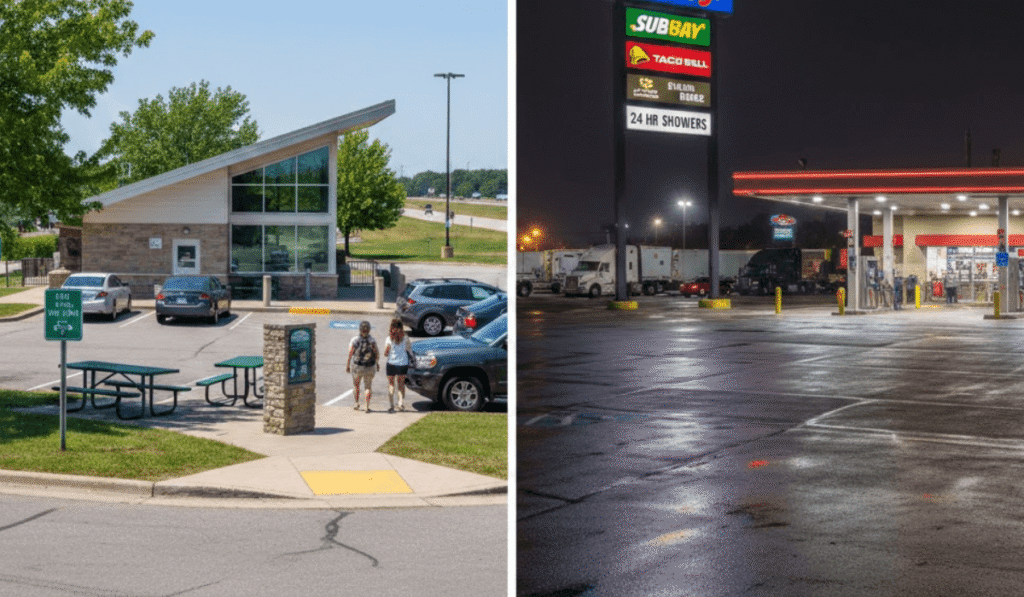
If you’ve ever blown past a highway rest area sign while desperately hoping for a Subway and a real bathroom, or pulled into a truck stop not quite sure if it was meant for you, you’re not alone. The difference between a rest stop and a truck stop confuses a lot of drivers, and it’s actually worth understanding. The right choice depends on what you need, when you need it, and where you are. Here’s the friendly, practical breakdown.
What Is a Rest Stop?
A highway rest area (also called a rest stop or safety rest area) is a government-operated facility located directly off an interstate highway. These are built and maintained by state departments of transportation, funded by highway taxes, and provided as a free public service to drivers.
At a minimum, a rest stop offers restrooms and parking. Most also have vending machines, picnic tables, and informational kiosks. Many have pet walk areas. Some — particularly welcome centers at state borders — offer staffing, tourist information, and surprisingly nice grounds.
What rest stops don’t have: fuel, food service (beyond vending), showers, or anything you’d need to pay for (with a few exceptions). They’re built for one purpose — giving drivers a safe, free place to pause.
What Is a Truck Stop?
A truck stop is a privately owned business designed to serve commercial drivers on long hauls. The big names are Pilot Flying J, Love’s, TA, Petro, and Buc-ee’s — all of which operate national or regional chains with consistent amenities.
Truck stops offer fuel (diesel and gasoline), restaurants (fast food chains and sit-down options), convenience stores, showers, laundry facilities, truck scales, parking for large vehicles, and in many cases, a mechanic or tire shop. They’re open 24 hours, seven days a week, and they’re designed for people who spend serious time on the road.
For everyday drivers, the biggest advantages of truck stops are food, fuel, and facilities — things rest stops simply don’t provide.
The Key Differences at a Glance
Ownership: Rest areas are government-run; truck stops are private businesses. Cost: Rest areas are free to use; truck stops charge for fuel, food, and services (though parking and restroom access are generally free). Hours: Most major rest areas are open 24 hours, but some have reduced hours seasonally; truck stops are always open. Amenities: Rest areas offer basics; truck stops offer a full range of services. Food: Rest areas have vending at best; truck stops have restaurants. Showers: Never at rest areas; almost always at truck stops. Fuel: Never at rest areas; always at truck stops.
Which Should You Choose?
For a quick break — bathroom, stretch, a few minutes out of the car — a rest area is perfect. It’s fast, it’s free, and there’s no commercial noise. If you just need to stop and reset for 15 minutes, a rest area does the job cleanly.
For anything more substantial — fuel, a real meal, a shower, or an overnight stay — a truck stop is the better call. The amenities are better, the parking is more spacious, and the 24-hour consistency means you’re never pulling up to a locked door.
For multi-day road trips, the smart move is to use both strategically. Use rest areas for short breaks between bigger stops, and use truck stops for fuel-and-food pit stops every three to four hours. Mix them based on what you need at any given moment.
A Word About Safety at Both
Both rest areas and truck stops are generally safe, especially during daylight hours and at well-trafficked locations. For night stops, busy truck stops have an edge — more activity, better lighting, and 24-hour staff. Isolated or poorly lit rest areas at night deserve more caution, especially for solo travelers.
For finding both types of stops along your route, restareasnearme.com gives you a comprehensive view of what’s available before you’re on the road and relying on your phone signal to figure it out.