
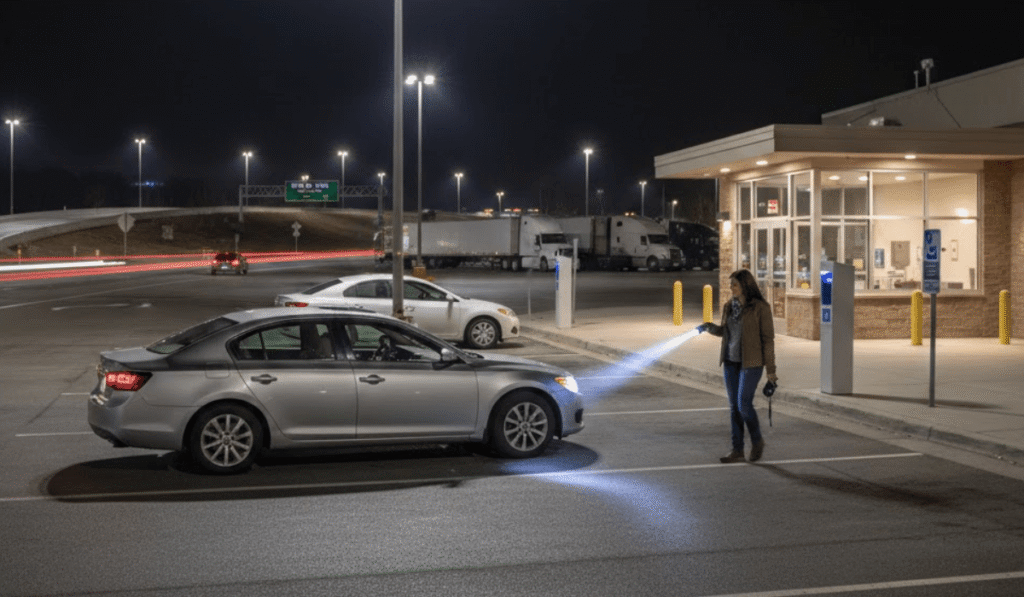
Stopping at a rest area after dark brings up questions that daytime stops never do. Is it safe? Should I be worried about who else is there? What if something goes wrong? These are reasonable things to think about, and the good news is that nighttime rest area stops are, in the vast majority of cases, completely fine. With a bit of awareness and a few smart habits, you can pull off safely, get the break you need, and get back on the road with confidence. Here’s everything you need to know.
The Reality of Nighttime Rest Area Safety
Let’s start with some honest context. Serious incidents at US highway rest areas are relatively rare, given the enormous volume of people who use them. Most rest areas — particularly on major interstates — have good lighting, regular law enforcement patrols, and emergency call boxes.
That said, not all rest areas are equal, and late-night stops in isolated locations warrant more care than a midday stop at a busy welcome center. The goal isn’t to be fearful — it’s to be observant and prepared, the same way you’d be in any unfamiliar public space after dark.
How to Read a Rest Area Before You Park
As you pull in, take 20 to 30 seconds to assess the situation before you park and get out. Look for: good overhead lighting throughout the lot, other vehicles present (especially a mix of cars and trucks — a diverse group of travelers is a good sign), the main building being open and lit, and clear sight lines throughout the parking area.
Red flags to take seriously: very few or no other vehicles, broken or missing lights, a general sense of disrepair, or people loitering near the building without an apparent purpose. If any of these feel pronounced, trust your instinct and drive to the next stop. It’s almost never worth overriding that gut feeling.
Where to Park for Maximum Safety
Park near other vehicles — not so close that it’s cramped, but within visual range of other people. Avoid the far corners of parking lots where you’d be isolated and potentially out of sight of the main building.
If trucks are parked overnight, consider parking near them. Professional drivers choose their overnight stops carefully and tend to pick the safest, most reliable facilities. Their presence is generally a good indicator of a decent stop.
Park facing the exit if possible, so you can leave quickly without having to maneuver. Keep your car in an area that stays lit for the full duration of your stop.
Safety Gear Worth Having in Your Car
A few simple items make nighttime stops significantly more comfortable. A personal alarm — the kind that emits a loud, piercing sound when activated — is small, cheap, and effective as a deterrent and attention-getter. A bright flashlight (or your phone’s flashlight) lets you see clearly as you walk to and from the building.
A portable phone charger is essential. A dead phone at a rest area at 2 AM is a completely avoidable problem that creates real stress. Carry one and keep it topped up.
For drivers who sleep at rest areas overnight, door stop alarms provide an extra layer of security by preventing the door from being opened from the outside and triggering a sound if someone tries. Window shades add privacy and block parking lot lights.
During Your Stop: Smart Habits That Matter
Move with purpose. Use the restroom, get what you need, and return to your car. You don’t need to rush or be anxious — just avoid lingering unnecessarily outside, especially in areas away from the main building.
Lock your car when you leave it, even for two minutes. Keep valuables out of sight — bags, electronics, and anything worth stealing should be in the trunk or at least not visible through the windows.
Let someone know where you are. A quick text to a friend — ‘stopped at rest area on I-95 near Jacksonville, heading out in 20 minutes’ — takes ten seconds and means someone knows your location if you need help.
If anything makes you uncomfortable while you’re stopped — a person following you, an interaction that feels wrong, a situation that escalates — go directly to your car, lock the doors, and if needed, drive to the nearest open business or call 911. Most rest areas have emergency call boxes as well.
Nighttime rest area stops are a normal part of road travel, and confidence comes from preparation. Use restareasnearme.com to find well-rated, reliable stops before you leave, and approach each stop with calm awareness. The road is yours — day or night.