
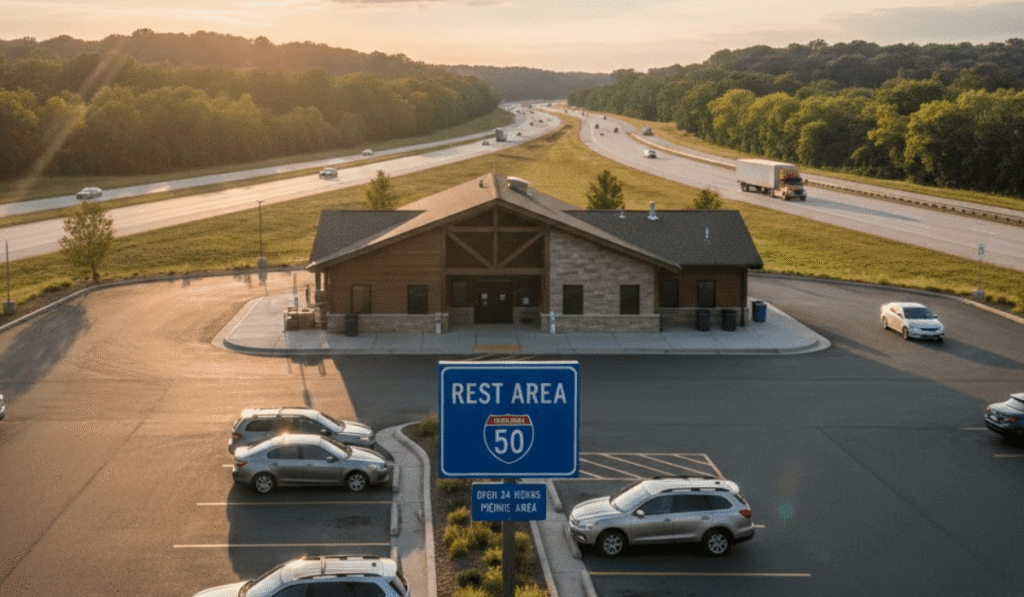
One of the most common questions road trippers search for before a long drive is also one of the most practical: how far apart are rest areas on US highways? The answer isn’t as simple as a single number, because spacing varies by state, by highway type, and even by the age of the road. But there are general patterns you can count on, and understanding them helps you plan smarter stops instead of white-knuckling it through the last 40 miles, hoping something shows up. Here’s everything you need to know.
The Federal Guidelines Behind Rest Area Spacing
The Federal Highway Administration (FHWA) sets guidelines for interstate rest areas, but these are recommendations rather than rigid mandates. The general standard calls for rest areas to be spaced no more than 50 to 60 miles apart on major interstate corridors. The reasoning is straightforward: most drivers can safely manage an hour of highway driving before needing a break, and at typical highway speeds, 50 to 60 miles covers roughly that window.
These guidelines apply to new highway construction and major renovations. Older interstates — and there are a lot of them — were built before modern standards and may have longer gaps. That’s why you can drive 80 miles through certain states without seeing a rest area sign, while in others, you seem to pass one every 30 miles.
How Spacing Varies by State
State DOTs have considerable control over their own rest area programs, and the differences are noticeable. Florida, for example, has invested heavily in its rest area network and tends to space facilities fairly consistently along major routes. Virginia and Tennessee are similar — both states have robust rest area systems with relatively predictable intervals.
On the other end of the spectrum, some western states like Nevada, Wyoming, and Montana have long stretches of highway with minimal services of any kind. Rest areas in these states can be 60, 70, or even 80 miles apart in remote sections. This isn’t negligence — it reflects population density and the economics of maintaining facilities in sparsely traveled corridors.
Urban interstate sections also thin out when it comes to traditional rest areas. Around major cities, the assumption is that there are enough gas stations, fast food stops, and services that dedicated rest areas aren’t as necessary. This is largely true, though it can catch you off guard if you’re used to rural highway spacing.
What to Do When Rest Areas Are Closed for Maintenance
Rest area closures happen — for seasonal maintenance, renovation, staffing issues, or emergency repairs. Most states post warning signs one to two exits ahead of a closed facility, but not always. If you find yourself staring at a locked rest area at an inconvenient moment, here’s how to handle it.
Check your navigation app immediately for the next exit with services. Google Maps and Apple Maps both show nearby fuel stations and restaurants with a quick search. iExit is specifically designed for this — it shows what’s at the next several exits on your route so you can decide while you still have time.
If you’re in a bind, gas station restrooms are almost always available to paying customers. A bottle of water or a pack of gum is a small price for access. Truck stops are another excellent fallback — they’re open 24 hours and have real restroom facilities, not just a single stall.
Tips for Planning Your Stops Proactively
The best time to identify rest areas is before you start driving, not when you’re desperate. A few minutes of route planning can make the whole trip smoother.
Before you leave, pull up restareasnearme.com and look at your route. Identify rest areas at roughly 90 to 120-minute intervals — slightly shorter than the maximum spacing to give yourself a comfortable buffer. Note which ones are welcome centers or full-service facilities, and which are basic stops.
For long drives through states with wider spacing — a Nevada crossing, a Montana run, a remote stretch of I-10 through West Texas — plan your stops earlier and more deliberately. Don’t wait until you need a break; stop when you have the opportunity.
A Simple Rule That Works
If you take nothing else from this, take this: stop every 100 miles or every two hours, whichever comes first. This isn’t just about bathroom breaks — it’s about safety. Fatigue builds up gradually, and most drivers underestimate how much their alertness has declined after two or three hours behind the wheel. Regular stops, even brief ones, reset your focus and reduce accident risk meaningfully. The rest areas are there for exactly this purpose. Use them.