
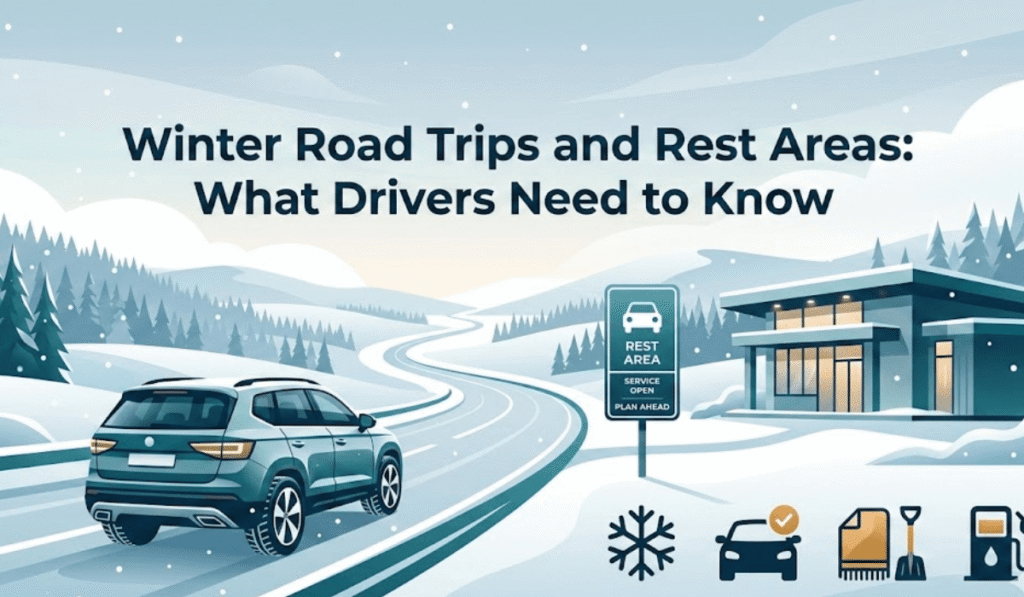
Driving in winter is a different game entirely. The roads are less forgiving, the weather can change without warning, and a pit stop that would take five minutes in July can turn into a cold, slippery ordeal in January. But winter road trips are also some of the most beautiful and memorable drives you’ll ever take — if you’re prepared. Here’s how rest areas fit into safe winter travel and what to know before the temperatures drop.
Which Rest Areas Close in Winter
This is the most important thing to know before a winter road trip: not all rest areas stay open year-round. States in colder climates — Michigan, Wisconsin, Minnesota, Montana, Wyoming — often close certain rest areas seasonally, typically between November and April, depending on the facility and the severity of that year’s weather.
Some closures are full shutdowns; others are partial (restrooms locked, but parking lot still accessible). A few states convert some rest areas to emergency-only stops in winter, where you can pull off and call for help, but facilities are otherwise unavailable.
Always check the state DOT website for rest area status before a winter drive through a northern state. What was open when you drove the route in August may be locked tight in February.
Rest Areas as Emergency Safety Stops
One of the most important roles rest areas play in winter is as an emergency refuge. If you hit a sudden storm, visibility drops to near zero, or road conditions deteriorate faster than expected, a rest area is exactly where you should pull off and wait it out.
This isn’t weakness or over-caution — it’s smart driving. State police and DOT workers know that rest areas serve as safety zones during severe weather events. Pulling in to wait out a squall for 30 minutes beats spinning off an icy highway.
Keep your gas tank at least half full in winter. If you do have to wait at a rest area for an extended period, you’ll need fuel to run the heater. A full tank is one of the most practical winter safety measures there is.
Cold Weather Stop Survival Tips
Step out of the car briefly at each rest stop, even when it’s cold. Your body needs movement to maintain circulation during long drives, and the cold air actually helps fight fatigue better than the heated interior of a car that’s been running for three hours.
Keep a winter kit in your car: a wool blanket, an ice scraper and snow brush, hand warmers, a small shovel, and snacks that won’t freeze solid (nuts and jerky hold up better than apples and bananas in below-freezing temperatures).
If you’re stopping overnight at a rest area in winter, research the location’s reputation in cold-weather user reviews. Some rest areas are well-sheltered with strong overnight facilities; others are exposed and very cold even with your heat running.
Navigating Winter Rest Area Lots
Rest area parking lots in winter can be icy, uneven from snow plowing, or partially blocked by snow banks. Take your time pulling in and look for the cleared driving lanes before you commit to a path. Don’t assume the lot is the same layout as in summer — snow can obscure curbs, parking markers, and pedestrian areas.
Walk carefully between your car and the facilities. Carry your keys in hand, not in a pocket you’ll struggle to reach with cold fingers. And leave a few extra minutes for the windshield defrost cycle before you pull back onto the highway.
Plan More Conservatively in Winter
Whatever your summer road trip pace looks like, dial it back by 20 to 30 percent in winter. Plan shorter daily distances, identify rest areas and services more carefully in advance, and build in flexibility for weather delays. Visit restareasnearme.com to map your stops before you leave and verify current status through state DOT websites. Winter driving rewards preparation and patience in equal measure.